For decades, the Gulf’s energy vulnerability could be reduced to a map and a narrow passage. Between Iran and Oman, the Strait of Hormuz concentrates a considerable share of the region’s oil exports. Any crisis capable of disrupting navigation there therefore raises the same question: where does the oil go if Hormuz becomes impassable?
Saudi Arabia had an answer.
It runs across the kingdom from east to west.
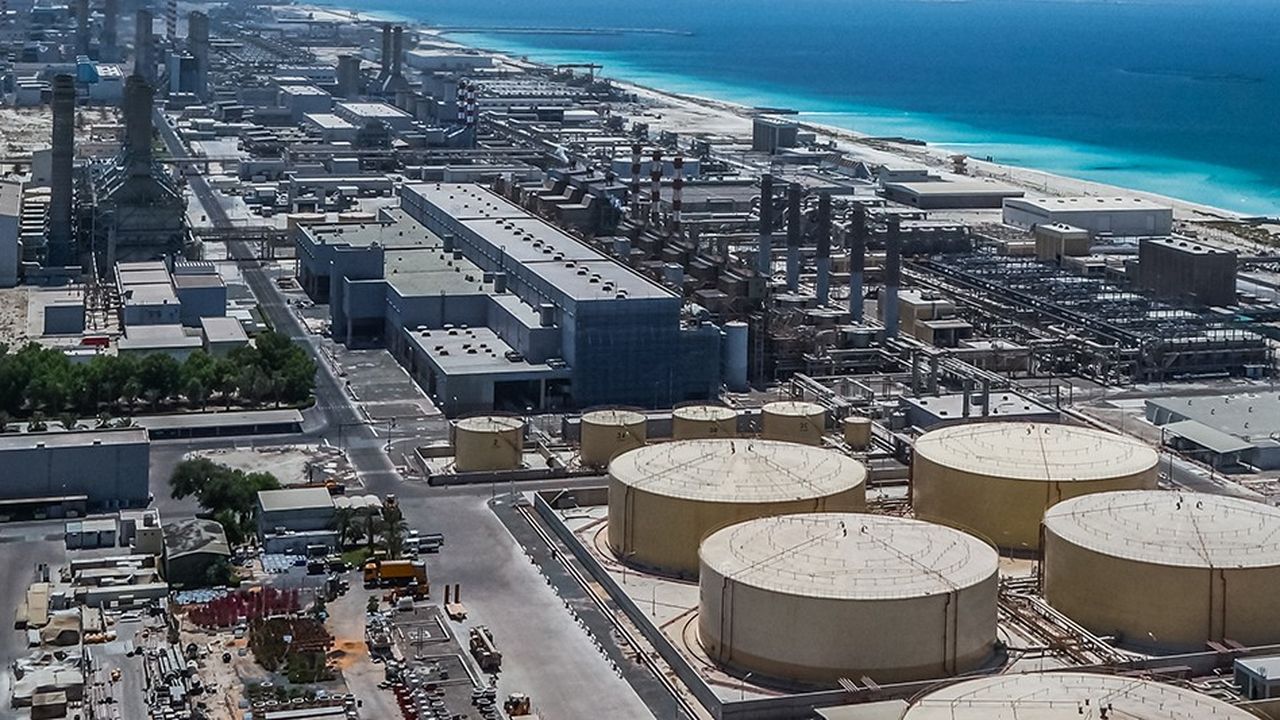
The East-West Pipeline, also known as Petroline, connects Saudi oil facilities in the east to Yanbu on the Red Sea. Its strategic purpose has long exceeded that of an ordinary transport infrastructure. It is a form of geographical insurance: when the Persian Gulf becomes too dangerous, a substantial share of Saudi crude can be moved westward, loaded onto tankers at Yanbu and exported without passing through Hormuz.
On September 11, 2026, that insurance was suspended.
Saudi Arabia’s Energy Ministry announced the temporary shutdown of the pipeline as a precaution after several drone attacks the previous day in the Riyadh and Medina regions. Saudi authorities say the aircraft originated from Iraqi territory. Baghdad confirmed that the attacks had been launched from Iraq, opened an investigation and dismissed the commander responsible for operations in Maysan province. The identity of those behind the attacks, however, has not been publicly established.
Riyadh has so far chosen not to respond militarily. That restraint does not alter the geography of the problem.
Because almost simultaneously, more than a thousand kilometres to the southwest, a second escape route was becoming more fragile.
An Island in the Middle of the Passage
In Yemen, the Houthis have made their most significant territorial advance in years along the Red Sea coast. After advancing towards Mokha and Dhubab, they seized Mayyun, also known as Perim, a small volcanic island whose size matters far less than its location.
Mayyun lies inside the Bab el-Mandeb Strait.
The geography is almost too explicit. Between Yemen and the Horn of Africa, Bab el-Mandeb forms the southern gateway to the Red Sea. The island divides the strait into two channels. Controlling it does not automatically mean controlling international navigation, still less possessing the ability to close the passage indefinitely. But it provides a position for observation and potentially action at the heart of one of the world’s principal commercial chokepoints.
The Houthis therefore have more options to monitor, threaten or disrupt maritime movements around the strait.
They maintain that navigation remains safe for companies other than those they specifically target. The distinction matters. It prevents Bab el-Mandeb from being described as a strait that is already closed. But shipowners, insurers and governments do not assess risk solely on the declared intentions of an armed movement. They also consider its capabilities, the proximity of its forces and the possibility that the rules may change.
This is where Mayyun meets Yanbu.
Redundancy Is Disappearing
The Saudi oil system rested on a relatively simple principle. When the eastern route became dangerous, the western route could absorb part of the shock.
That architecture has acquired renewed importance as navigation through Hormuz has become severely disrupted. According to data from the U.S. Energy Information Administration, Saudi Arabia has redirected crude towards Yanbu through the East-West Pipeline precisely to bypass the strait. Oil flows through Bab el-Mandeb consequently averaged 8.1 million barrels per day in the second quarter of 2026, compared with 5.4 million in the fourth quarter of 2025.
The shift illustrated the very purpose of bypass infrastructure: moving the risk elsewhere.
But moving a risk does not necessarily eliminate it.
Crude transported to Yanbu reaches the Red Sea. To sail directly from there towards Asian markets, tankers normally have to head south through Bab el-Mandeb. That route now passes immediately alongside territory and positions controlled by the Houthis.
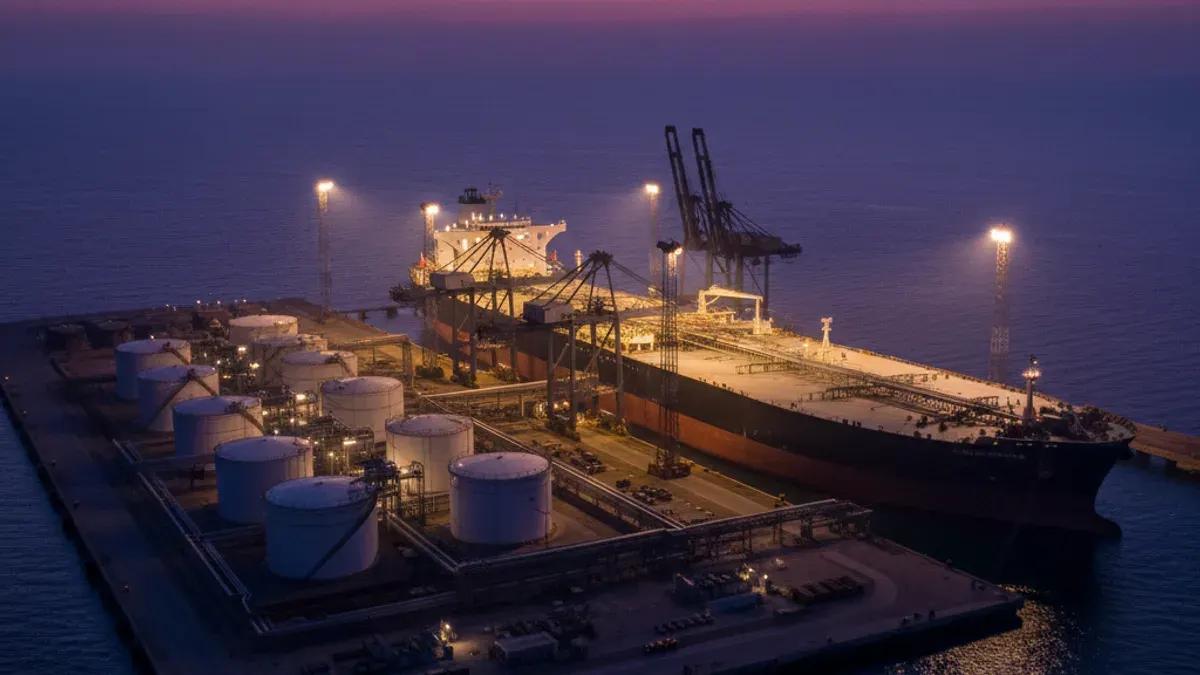
On September 10, even before the pipeline shutdown was announced, crude and condensate loadings at Yanbu had rebounded after declining in August. Vortexa estimates placed them at around 3.7 million barrels per day in September, while Kpler estimated roughly 2.9 million. Yanbu had therefore become once again precisely what it was designed to be: Saudi Arabia’s principal relief valve when Hormuz becomes dangerous.
The following day, the pipeline feeding it was temporarily shut down and Mayyun fell under Houthi control.
That conjunction matters more than either event considered separately.
The Detour Around the Detour
Saudi Arabia is not trapped.
Oil already available at Yanbu can move north through the Red Sea towards Egypt and reach the Mediterranean through the Suez Canal or the Sumed pipeline system. Cargoes can then reach Europe or continue farther afield.
But this option reveals a peculiar inversion of Saudi Arabia’s energy geography.
For a European customer, Yanbu retains an obvious advantage. For an Asian customer, however, oil produced in the eastern Arabian Peninsula may have to be shipped west, carried north towards the Mediterranean, then transported around a substantial part of the Old World before turning back towards Asia.
The route designed to bypass Hormuz must itself be bypassed.
According to estimates reported by the Associated Press, a voyage to South Korea that would normally take around twenty-four days could approach fifty-four days using such a route. For a single cargo, that means more fuel, more days of vessel utilisation, more financing and longer exposure to maritime risks. At the scale of millions of barrels per day, it becomes a change in the physical economics of the oil trade.
Energy security, therefore, is not simply a question of how many barrels exist. It also depends on whether those barrels can reach the right place, at the right time and at an acceptable cost.
That margin is narrowing.
Three Fronts Around One System
The shutdown of the East-West Pipeline has another distinctive feature. The threat did not come from the south.
Saudi and Iraqi authorities say the drones that struck the kingdom were launched from Iraqi territory. Iraq condemned the operation and initiated measures against officials responsible for the area concerned. U.S. President Donald Trump said on September 12 that he considered Iran probably responsible. That political assessment does not, however, amount to demonstrated attribution, and no publicly available evidence has so far established Tehran’s direct responsibility.
Caution is essential, but the geography remains.
For Riyadh, the security calculation now extends in several directions. To the east lies Hormuz and the confrontation with Iran. To the southwest, the Houthis are advancing along Yemen’s coastline and around Bab el-Mandeb. To the north, Iraqi territory can provide operational depth for armed groups capable of reaching infrastructure deep inside the kingdom.
An architecture designed to bypass a specific geographical threat is therefore becoming exposed to distributed threats.
Protecting a single strait is no longer enough.
Saudi Arabia must protect production facilities, pumping stations, more than a thousand kilometres of pipeline, Red Sea terminals, the vessels leaving those terminals and the maritime passages they must subsequently cross.
The redundancy still exists on the map. Guaranteeing it in the real world is becoming considerably harder.
The Price of Geography
It would be premature to conclude that the Saudi export system is paralysed.
The duration of the East-West Pipeline shutdown remains unknown. Authorities have not publicly established the precise extent of any damage or indicated whether the infrastructure is technically unavailable or merely suspended as a precaution. Yanbu’s storage capacity also provides a degree of operational flexibility.
Similarly, the seizure of Mayyun does not give the Houthis a switch with which they can close Bab el-Mandeb at will. Holding an island is one thing; indefinitely denying passage through an international strait in the face of regional and Western military capabilities is another.
But structural change does not require complete closure.
It is enough for every alternative to become less certain.
For years, the vulnerability of Hormuz could be partly offset by the Saudi pipeline. The vulnerability of the pipeline could be absorbed by inventories and Red Sea terminals. Risks around Bab el-Mandeb could push vessels north towards Suez and the Mediterranean. Each problem had, at least partially, another route.
That logic works as long as the crises remain separate.
Increasingly, they do not.
The real development of the past few days may therefore be neither the temporary shutdown of a pipeline nor the capture of a small Yemeni island. It lies in their simultaneity. Infrastructures that were supposed to substitute for one another are beginning to belong to the same theatre of confrontation.
The Gulf still has its reserves. Saudi Arabia still has its pipelines, its terminals and its ability to reorganise exports. Bab el-Mandeb remains open.
But in an energy system built around the assumption that there will always be another route, the danger begins long before the last one is closed.
It begins when the escape routes cease to be independent of one another.
Main Sources
Reuters — “Saudi East-West oil pipeline was temporarily shut down after attacks, state media reports,” September 11, 2026.
Reuters — reporting on the Iraqi origin of the attacks, Baghdad’s investigation and the dismissal of a military commander, September 11–12, 2026.
Reuters — maritime traffic data for the Strait of Hormuz and Bab el-Mandeb and oil loadings at Yanbu, September 10, 2026.
Associated Press — “Saudi Arabia shuts down a pipeline as Houthis seize an island, opening a new front in the Iran war,” September 11, 2026.
U.S. Energy Information Administration — Short-Term Energy Outlook, August 2026; data on the redirection of Saudi exports, the East-West Pipeline and flows through Bab el-Mandeb.
U.S. Energy Information Administration — World Oil Transit Chokepoints; structural data on Hormuz and available bypass capacity.
MidEast Limits
MidEast Limits’ editorial and analytical desk.